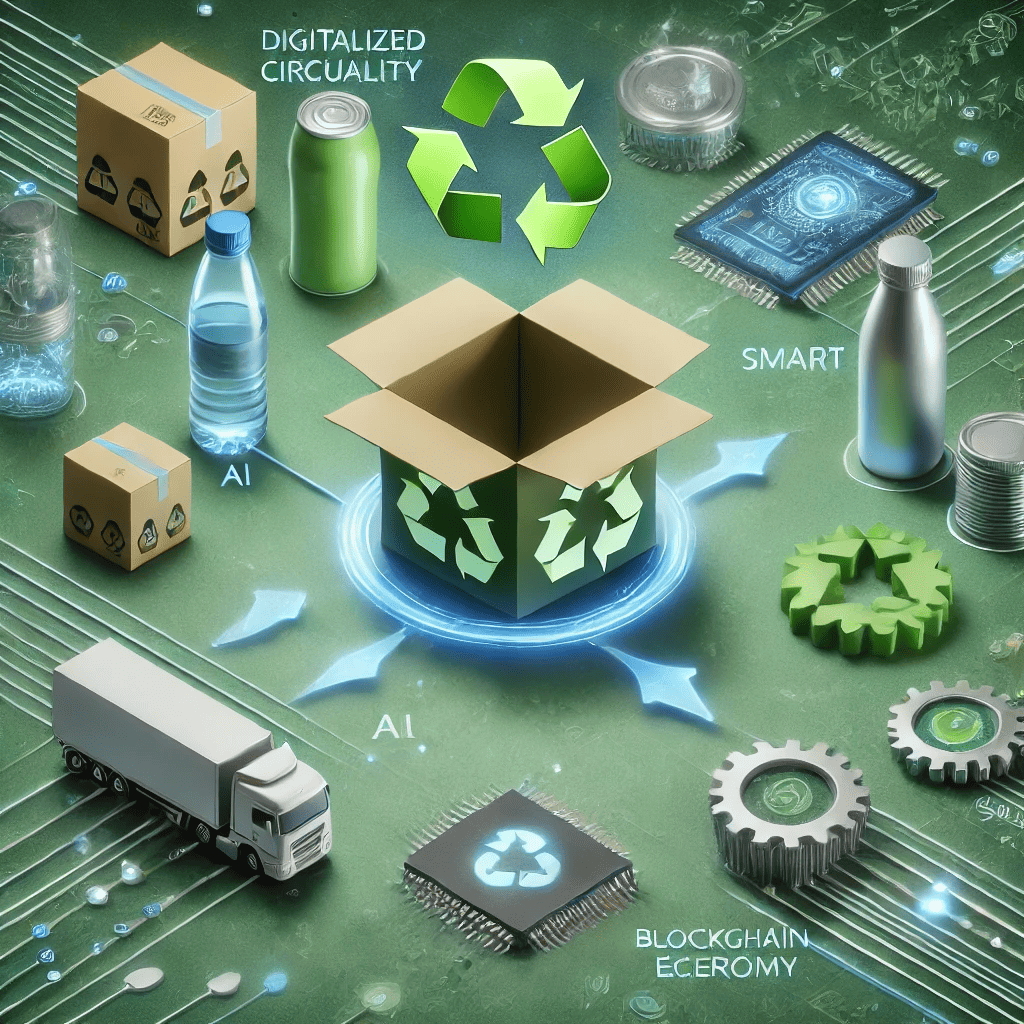
As the packaging industry takes significant strides toward sustainability in 2024, digitalized circularity emerges as one of the standout trends. This concept combines digital technologies like blockchain, artificial intelligence (AI), and the Internet of Things (IoT) with traditional circular economy principles. Its goal is to optimize waste management, reduce environmental footprints, and enhance the efficiency of material recycling and reuse.
The industry has made significant advancements with technologies such as smart labels, which track the lifecycle of packaging from production to disposal. These technologies not only improve waste management but also provide consumers with clear information about the recyclability and sustainability of packaging, enabling them to make informed choices.
Leading packaging companies are investing in alternatives like renewable materials and biodegradable plastics. For example, polylactic acid (PLA), a bioplastic derived from corn starch, is increasingly favored by the food and beverage packaging sectors due to its renewable nature.
Digitalized circularity promises to revolutionize how the packaging sector approaches waste management. Experts predict it will lead to more efficient recycling processes, reduced landfill waste, and a broader use of recycled and reused materials in production. Additionally, this shift fosters a more transparent supply chain, aligning sustainability goals between producers and consumers more effectively.
This trend reflects not only technological innovation but also the growing consumer demand for sustainable practices. Studies reveal that 73% of consumers are willing to pay more for sustainably packaged and traceable products. Companies embracing digitalized circularity will not only enhance their environmental credibility but also gain a competitive edge in an increasingly eco-conscious market.